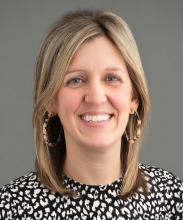
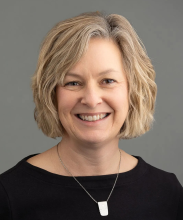
When memory, thinking or communication changes begin, knowing where to turn for support can make all the difference. In this episode, we explore how two key health care specialties can help individuals and families meet those challenges with confidence. Sarah Gunderson, an occupational therapist, and Kari Esser, a speech-language pathologist, draw from their work supporting people experiencing a wide range of neurological conditions to walk us through the foundations of their specialties and their unique roles in mild cognitive impairment (MCI) and dementia care. Sarah and Kari also provide a preview of their upcoming talk, “Partnering with Your Healthcare Team,” as part of the 2025 Healthy Living with MCI education program.
Guests: Sarah Gunderson, OT, occupational therapist, UW Health, and Kari Esser, MS, CCC-SLP, speech-language pathologist, UW Health
Show Notes
Register and learn more about the upcoming Healthy Living with MCI event featuring Dr. Chin, Sarah Gunderson and Kari Esser, happening on December 12, 2025, and future programs on our website.
Learn more about Sarah from her profile on the UW Health Website.
Learn more about Kari from her profile on the UW Health Website.
Connect with us
Find transcripts and more at our website.
Email Dementia Matters: dementiamatters@medicine.wisc.edu
Follow us on Facebook and Twitter.
Subscribe to the Wisconsin Alzheimer’s Disease Research Center’s e-newsletter.
Enjoy Dementia Matters? Consider making a gift to the Dementia Matters fund through the UW Initiative to End Alzheimer’s. All donations go toward outreach and production.
Transcript
Intro: I'm Dr. Nathaniel Chin, and you're listening to Dementia Matters, a podcast about Alzheimer's disease. Dementia Matters is a production of the Wisconsin Alzheimer's Disease Research Center. Our goal is to educate listeners on the latest news in Alzheimer's disease research and caregiver strategies. Thanks for joining us.
Dr. Nathaniel Chin: Welcome back to Dementia Matters. Today I'm joined by Sarah Gunderson and Kari Esser. Sarah is an occupational therapist and Kari is speech-language pathologist. As part of their work at UW Health, they support individuals affected by a range of neurological conditions including stroke, brain injury, multiple sclerosis, Parkinson's disease and dementia. Sarah and Kari join us to discuss their unique healthcare specialties and share a preview of their talk titled “Partnering with Your Healthcare Team” as part of the final Healthy Living with Mild Cognitive Impairment education program of 2025 happening on Friday December 12th 2025. Sarah and Kari, welcome to Dementia Matters.
Kari Esser: Thank you.
Sarah Gunderson: Thanks for having us.
Chin: Well so to start, for listeners who might not know what an occupational therapist or a speech-language pathologist is, can you each explain a bit about what your roles are, the work you do for a general population outside of cognitive impairment and then the education training required for each of your positions?
Gunderson: For an occupational therapist (OT), I'll start with our education. Our training involves either a master's degree or a doctorate. A master's in OT or a doctorate in occupational therapy. You go and get a bachelor's degree, which is typically in biology, kinesiology, psychology, or similar, and then move on to get the master's or doctorate. That training includes at least six months of fieldwork where you're working in an actual occupational therapy setting and you have a fieldwork supervisor. That's some hands-on training. Then you sit for a national certification exam and have to pass that exam and get state licensure. Then you're an occupational therapist.
Chin: That's the training, Sarah. Then how about the particular roles that you have, the work you do for a population that does not have cognitive impairments?
Gunderson: Sure. Occupational therapy as a field is quite broad so we can work with a large variety of individuals. Our overall goal is really to help individuals improve or recover or maintain their skills for daily living. Those living skills really can range from basic self-care activities like brushing teeth or getting dressed to very high-level activities such as cooking or driving, school or work. Then within OT there are a number of different specialties. That could involve rehabilitation, which is what my role is. Pediatrics. OTs can work in mental health. There's health and wellness roles. OTs can work in work and industry. The client base is really broad and so are the settings. OTs can work in home. There's birth to three programs in the home. There's home health which a lot of people are very familiar with. OTs can work in hospitals, outpatient clinics, in workplaces for larger workplaces and then in community practice. As I said, it's really broad. Occupational therapy can look very different depending on the client as well as the setting. We can work with individuals that have neurological or neurodegenerative disorders, like stroke or dementia. We can work with individuals that have orthopedic issues, so issues with the bones or joints or muscles of the arm or hand, individuals with low vision, children that have cognitive or physical disabilities or sensory processing challenges, those with mental health challenges or those who have workplace injuries or who are just interested in injury prevention. OT can work with each of them. Again, the goal is just really to improve the ease and independence of performing daily activities, trying to help clients achieve their most productive and satisfying lives.
Chin: That's a great summary. Okay with that, Kari, then how about speech-language pathologists?
Kari: Yeah so for speech-language pathologists, that is a master's program, so completing your undergraduate work and then a two-year master's program. Within that is also some field placement in the sense that we have three different practicums that we are in. Typically we need one in education. In a school setting, also a medical setting. Then we often work within our clinic setting too, which is quite nice. Speech pathologists work with adults and with children. Very similar to what Sarah said, we are in lots of different environments. I have worked solely as an adult speech pathologist, so that's where my knowledge is. I've worked in a lot of different settings including in a skilled nursing facility so more subacute rehab. We also are in a hospital setting. We can be in a real rehabilitation clinic. Home health, as Sarah said as well, and then in the outpatient clinic. Then for pediatrics often we are working in the school setting but also can be working in a more medical-based setting. Very similar to occupational therapy in that we wear lots of different hats. When it comes to adults, what I have been working with in my entire career is adults with neurologic disorders and typically working with communication or cognition. Speaking, so being able to find the right words, get those words out clearly. Also working on cognition so that could be attention and concentration, memory, problem solving, et cetera. We also, in speech-pathology world, work with people in swallowing. We help people with eating and making sure that they're eating safely. We can also help people with voice. If people are having some voice-related issues, that's another role of speech pathologists so helping with vocal quality, vocal intensity. Then we also help with augmentative communication meaning that if people are requiring some level of communication assist, something as simple as a couple of pictures on a piece of paper to a very high-tech computerized system, speech pathologists also help with that. Our overall goal is really helping people to be as independent as they can be with communication. Getting their point across, their needs met and then as well as the cognition. Then that swallowing and that voice piece too which I do not directly do but I have many colleagues that help in that area.
Chin: Both of you, the fields itself have such broad capabilities in ways of helping people with function and their quality of life. Of course it's always been my dream to have a memory clinic program where speech language and occupational therapy and physical therapy and health psychology are all in the same space. I know that that's still a dream but I do wonder, is there a shortage in health care? Are you guys seeing that there's a need for more and more training as far as the younger generation coming up and fulfilling the needs of an older population?
Esser: That's a great question. I'm not sure for speech pathology if there is a greater need for speech pathologists. I just know in our own clinic where Sarah and I work collaboratively we often are trying to get people in as soon as possible, so there is a struggle in that regard of getting people that care right away. As a broad field, I don't really know. I do follow some different social media groups and I'm seeing a lot of people out there that are getting the training. I'm hoping that there's many of us out there. I would say in the Madison area we are working hard to get people seen as quickly as possible.
Gunderson: Yeah and I would say similar for occupational therapy. I don't know that there's a shortage of practitioners, but I think that within systems there might not be adequate providers to meet the needs. We would love to have additional OT because there is the demand but we just don't have the space currently. There are issues with access but I don't think it's necessarily a lack of providers that are trained and able to work.
Chin: Okay. Well I'm not surprised. It sounds like a great field and I can see a lot of people wanting to go into it, but it does speak to the system needing to accommodate for the services that really can be provided. I want to use that sort of as a segue into what we do in memory care. How do your roles fit a person's dementia care team? What are some unique activities or therapies that you'll do specifically for people living with dementia?
Esser: Working with a dementia team includes a lot of areas that I had mentioned before. Helping with communication and cognition in those really simple terms. With me, I am often seeing people and working with the dementia team in helping people with communication. That could be something simple as some minor word-finding difficulty and wanting to just get better with communicating to even more challenging difficulties with communication, maybe even understanding or being able to have those social opportunities. Oftentimes people might be struggling with that word-finding which then impacts their confidence. They're limiting their socialization and maybe not putting themselves out there to be communicating outside of the home. One big role I see myself with the dementia team is being able to make sure that people are using those skills, really talking. I often will hear people say, “Oh I'm not talking so well, so I'm just avoiding it,” but I'm really communicating the opposite to them that it's so important to continue to maintain those skills. Be out there socializing, be talking. There's lots of different ways that we can support that and talk about ways that people can do that, but really wanting people to maintain those good skills when it comes to communication. Then there's the cognitive side of it too. Really a lot of what I do is talking about strategies to help people to essentially remember better. That's often what people struggle with, maybe, is memory. There are a lot of great tools that both speech therapy and occupational therapy have that we can help support people in keeping track of daily events and things that they need to do. A lot of what I do is really talking about strategies, that education for the individual as well as their care partner, and really helping them to maintain their functional abilities, their quality of life and do all the important things that they want to keep doing to maintain those abilities.
Chin: Kari, I know I send a lot of referrals to you for word-finding as well as when people are really frustrated by their repetition and families aren't sure how to handle that in the best way. I can tell you that you've always provided great counsel to them and the family members–and I'll have a question for you later about this–they've always appreciated the education that they get too. Even though I know you have the one patient but really there's other people who are learning in those sessions. A question I do have specifically for you is this idea of cognitive rehabilitation or cognitive rehab versus cognitive training, which some of our listeners might be reading about on Google. Can you kind of explain the differences between these two?
Esser: Yeah so cognitive rehab is really trying to rehab those abilities versus the training which is really using the tools and maybe resources, strategies. I really feel that they overlap so significantly and considerably in the sense that what I often like to say in the example I use is when we're talking about memory, when we use that memory strategy–let's say that post-it note to remind us to do something–we have that strategy in place. It's there to fall back on. Often just by using that tool, we're helping to reinforce memory. We are writing it down. We're seeing it. We're maybe saying it out loud, that motor skill of writing it. It's really helping to get it into our memory. We might be able to encode it or get it into memory. It might sit there and we're able to then retrieve it later. The good news is we've got that post-it note that's going to remind us just in case we forget. I feel that they overlap so much. I'm often doing rehabilitation so really helping the person to work on those skills, but also incorporating the training as well and what are those tools that you can use to help reinforce those thinking skills or those communication skills. They really overlap considerably.
Chin: Sarah then, how about your approach and how you are interacting on the dementia care team?
Gunderson: As I mentioned, the goal of OT is really to help individuals have their most productive and satisfying lives which includes decreasing frustration with tasks because we know, as you have mild cognitive impairments or dementia, that tasks can become really frustrating. Individuals want to be independent and when they're not that can be really difficult. Trying to come up with strategies to improve their independence and decrease their frustration, because what we don't want is for individuals to just stop participating in tasks and have loved ones or others take over tasks for them completely. Because we know that if they become more sedentary, if they're not doing activities, that can lead to other secondary issues that are not good. Physically, cognitively and in terms of mental health and their own feelings of self-worth, being sedentary or isolated really can become a downward spiral. We're trying to help them be engaged and as productive as possible. It really is kind of similar to speech therapy. We're really trying to identify what specific challenges the individual is experiencing. A lot of it is interviewing the patient and just identifying what types of struggles they're having. Maybe it's that they're having a hard time following through on the to-do list that they have. They just get off track or they forget or they're forgetting important information or they're not able to get to appointments on time. They just can't manage time well or they're struggling at work with specific tasks. Then diving deeper to figure out what is the underlying cause of some of those struggles? Is it more related to attention or memory or just a challenge with their initiation–they just can't get themselves started on the task–or are they really disorganized? Trying to figure out what some of the underlying challenges are. Then, from there, really coming up with a very specific plan to address that task on a very task-specific basis. Maybe we're adapting the task or we're using a specific strategy or tool for that task. Or sometimes we do need to train care partners or caregivers on how to appropriately help the individual. They're just not taking over the task completely but they're providing appropriate support where the individual is still engaged and doing as much of it as possible but maybe they just do need a little bit of help. The strategies and the approach is really individualized for each individual person along with their specific challenges.
Chin: I'm going to start with you for this one, Sarah, because you just talked about some of these functional changes and the importance of really personalizing it. I'm going to ask you to go a little bit broader now. How might your approach and the work you do differ when a person doesn't have dementia per se but they have mild cognitive impairment or they're just starting to have cognitive changes and they're just wanting to do everything they can to maintain as much of their ability, so more of a preventative approach for those functional changes. How might you approach that differently?
Gunderson: Sure. An individual who has mild cognitive impairment, more of our approach would include some of those internal strategies where we're trying to teach an individual how to improve their attention or how to really maximize their memory. Some of those strategies to improve the underlying skills, whereas if they're farther down the road and have dementia, more of it is about compensation. The main focus is on how to adapt the task or the environment or to provide the appropriate amount of support. Then I would say that, for those with mild cognitive impairment, the goal really is to maintain that independence as much as possible. Coming up with strategies on ways that they can continue to do the task independently versus with dementia–it is a lot of focus on the caregiver education and how they can provide appropriate support. With mild cognitive impairment, we are often reviewing the strategies to boost brain health and kind of optimize their cognitive performance through some of the healthy brain strategies that we know are proven by research. With dementia, I would say some of it does focus also on just safety and reducing fall risk and some of the strategies that really don't need to be addressed with mild cognitive impairment.
Chin: Kari, do you want to add on from the speech pathologist perspective?
Esser: Yeah, definitely everything that Sarah said is exactly what we see as well. When it comes to cognition, that internal strategy, that internal training versus more external as it progresses more to dementia. When it comes to communication, I would say it's the same thing with that care partner training as we move through the stages of dementia. I really feel like with mild cognitive impairment that individual, they're able to still demonstrate new learning. They have that insight awareness. They're really able to learn the techniques, the strategies, how to use communication strategies, how to really get that good socialization. When they're moving through those stages, it really becomes more of the care partner or caregiver that is doing more of that, especially when it comes to communication. Along that continuum the individual might be struggling to really understand, really struggling to express themselves, so wanting the care partner to have some great ways of being able to support that communication and lots of different strategies of just keeping it simple–simple requests, posing questions in more simple ways, maybe in a yes/no format or a multiple choice format. Really allowing the individual to still be able to communicate but in an easier way, more simpler way. Again, that falls more on the care partner being able to help and support them through that.
Chin: For those with cognitive impairment, what are the most common reasons for a referral to an occupational therapist and speech-language pathologist? I'm trying to get at what are the most common questions you might receive from patients and families? Then of course, for our listeners who might have those questions, what are some of your typical responses?
Kari: Yeah I would say, as you mentioned, word-finding difficulty, that tends to be a lot of the referrals I get. Again it's because it is more obvious. It tends to be very obvious to the individual when they're having those difficulties. I would say when I ask people, “Tell me why you're here today,” they will often say, “Well, I'm having word-finding difficulty.” Then that affects their confidence. Maybe, as I said before, they're not socializing as much or doing less of that. It's really training them on what are the strategies that you can use to help support your communication. I reference word-finding strategies a lot. There are ways that we can use strategies to help support us because we all use them. I use them too. It's really–I like to say– flipping the script in that people say, “Oh I'm struggling with finding my words so I'm talking about it,” or “I'm taking so long,” and saying, “Hey, that's okay if you have to describe that word or that person or that place.” Really letting them know that using those strategies is excellent and that's really what I want them to do. Then finding ways–if they're not able to get out and socialize as much, what are other activities that they can do to be able to really support speech and language skills? Reading is something that I recommend a lot and especially reading out loud, it's a really great way to practice that. People will often–will always leave actually–right away with some really great strategies and some activities that they can do to continue to promote their speech and language abilities, give them that confidence back. Then also, once again, that caregiver care partner training on, “Hey, how can you help this individual be able to be an effective and better communicator?” That's probably what I work on the most with individuals with mild cognitive impairment.
Gunderson: I would say the most frequent referral that we receive for individuals that have cognitive impairment is related to questions around driving, whether an individual should continue to drive. Sometimes family members have concerns. Sometimes the individual themselves has concern but more frequently family members have raised concerns or some of their medical providers have brought this up as an issue. They're coming to OT for more objective testing on their skills so that that can help to inform decision-making regarding their ability to continue driving. We do a pretty comprehensive test. It takes about two hours and we look at strength, coordination, reaction time, visual perception, some visual scanning, look at memory and attention and other cognitive skills. We can look at vision, do a vision screening if needed. It's quite comprehensive and pretty tiring for the individual to go through. It really does give some important information on the skills that are all necessary and important to be a safe driver to help inform that decision-making about whether or not driving should be something that they continue. I would say that that is probably the most frequent referral but we'll also get referrals when individuals struggle just with their daily functions, if they're struggling at work or just managing their household responsibilities or managing medications or their appointments, things like that. That could be a source of referral. If someone is starting to fall usually that's when they have a little more advanced cognitive impairment. If they're not using good safety or judgment when they're bending or reaching for things and they're starting to put themselves at risk of falling or they are falling frequently then OT can be involved or if they're just having other physical challenges. Again, maybe they're just not thinking through some of the best ways to move their body. They've forgotten some of the strategies so they might have a hard time getting up from a recliner, from a low toilet, and they just need some more training on how to do that more independently and more easily.
Chin: It seems like, Sarah, you could have one individual be referred to you for multiple different reasons at multiple different time points. Driving and then the other functional abilities that you've gone over.
Gunderson: Absolutely. Yeah, we can definitely see individuals across the time span where sometimes they're referred really early on when they have mild cognitive impairment. Then as their cognitive skills change, sometimes physical skills also change. Then they can return if there are changes with their function. We're happy to see them along the continuum.
Chin: Now both of you in your answers talked about the family member, the caregiver, and I think that's an important topic for us to cover. What is your interaction like with the patient's family member, caregiver, and are you providing them techniques and approaches as you're working with the patient?
Esser: We definitely appreciate it when that loved one or that care partner is a part of the therapy because of that training piece and really wanting to make sure that they are a part of the education, the training and also just to be able to help carry over the recommendations and the strategies that we suggest. We know as therapists that we’re in that clinic setting which is such a perfect setting. It's an ideal setting. People are saying, “Yes I'll do this.” Then when they get home it can be a very different world. Wanting to make sure that they have someone with them that can help with that carryover. We've made these suggestions. Now we really want you to implement them in the home environment. Having that loved one, care partner as a part of that is so important, especially when it comes to communication once again. It's a two-way street. Really, it's giving the individual the techniques and strategies but also that communication partner. Making sure they're knowing how to support the person when it comes to communication. Care partners leave feeling really appreciative, feeling more confident in being able to help the individual and then the person themselves feeling more confident too. We definitely appreciate having those loved ones along to be able to get that same education resources.
Gunderson: Yeah, I totally agree that the care partner is absolutely part of the treatment when it comes to working with individuals that have dementia. We love to have them in our sessions. Part of our intervention really is educating the family member or the care partner on how they can best support the individual who has cognitive challenges. Part of it is really supporting the caregiver also. We know that it's a challenge to be a caregiver. It is often a 24-hour job and it's very taxing and it can be very frustrating. Often they'll come in and they will have tried different strategies to help their loved one. The loved one may or may not be receptive to those strategies. It's validating their experience and giving them support that they need. We know they don't want to be a nag. They don't want to constantly be on their loved one giving cues. As I said, sometimes individuals aren't as receptive to that input from their family member. Part of what we can do in therapy is really help the individual identify what some of their cognitive challenges are because sometimes there is a lack of insight. An individual might not notice that they're having as much cognitive challenge as they are and how they might not notice the impact that it has. If their family member or care partner is constantly giving that input, they might sort of tune it out. Just hearing it from a professional is sometimes helpful and we can give more objective feedback. If testing has been done or if we have other types of feedback that we can give them, observations that we've seen in our clinic, they're often more receptive to hearing it from us. That is really validating for the caregiver to say, “See it's not just me, someone else is seeing this as well.” Then, like I said earlier, just really working together to identify and acknowledge those challenges and then come to a place where we can have an agreement that there are issues and that there is an interest in working on those issues because an individual isn't going to want to use strategies if they deny that there's a problem to start with. Identifying the challenge and then determining whether they're interested in working on improving their function and then coming up with that collaborative plan to improve things.
Chin: What do you wish your patients knew earlier? I'm asking because for our listeners who may have early cognitive change or maybe they've just been diagnosed with mild cognitive impairment or dementia, what would you tell them now so early in their journey?
Gunderson: I would say that it's never too early to come to therapy, to err on the side of an earlier referral rather than later because they might be able to avoid some frustration that they would otherwise experience and have more success if they have some of the tools and strategies early on. Have that referral earlier on for a speech or OT or both. Then it doesn't have to be a very long course of care. It might only be a couple of sessions early on and they might be good to go. Then knowing that they can come back if things do change down the road. Setting them up for success and setting them up to know what is available to them if their skills change later.
Esser: Yeah, I agree wholeheartedly. Earlier is better. It's never too early. As Sarah said sometimes it might just be a single quick visit and the individual doesn't need to come back but they are given those resources, those tools, those strategies to help them. They can always come back down the road. The other big reason I like people to come earlier on is just to really build their self-advocacy. I'm a big proponent of that. I really want people to feel confident in telling others what they need from them, thinking again more about that communication and feeling empowered to say, “Hold on a sec I'm trying to think of my word. Don't interrupt me. Give me a moment.” The sooner we can tell people to use those strategies the better because I found that the majority of people are very understanding and receptive to supporting others with communication. They just need to know how. If the individual can be armed with these really simple but powerful statements and letting other people know what they need from them, that gives them again the confidence and the success to continue to be a good communicator. The earlier we can have those discussions the better.
Chin: I guess the one thing I would add to that is for the listener, if you're the patient or the family member, bring this up to your provider. You'd think that this would be at the forefront of my mind as a memory specialist but there are times when I forget, “Oh I really can make this referral and this would be really helpful.” As a patient, just as Kari you said, advocate. Providers don't mind having people suggest, “Well can we do this? I think this is really helpful.” Especially knowing that earlier is better. Providers aren't perfect, so having someone mention, “You know, there are occupational therapists and speech-language pathologists. Can I go see one?” I don't think many people would ever fight you on that. Well so to end today, what other topics are you going to be covering or talking about at this upcoming Healthy Living with MCI event?
Gunderson: Part of what we'll be talking about is the role that anxiety can play in cognitive and communication challenges because a lot of times these cognitive changes or communication challenges are really distressing. It's no fun to have challenges with memory and to have these difficulties in daily life. That can be distressing and there can be anxiety and stress that then can sort of compound some of the cognitive challenges. We'll talk more about that. I think both Kari and I will be sharing some specific cognitive and communication strategies in a little more detail than we did today. Then I'll talk a little more about the clinical driver assessment.
Esser: Yep exactly. We look forward to having any type of questions that people might have and try to answer them to the best of our ability.
Chin: I think that's going to be one of the more exciting parts is the Q&A for the two of you. I want to thank you for being on the podcast today. I certainly am looking forward to joining you on the Healthy Living with MCI series. For our listeners, if you want to hear more from Sarah and Kari about how health care professionals work together to provide comprehensive care for people living with MCI and their support networks, please join us for this last Healthy Living with Mild Cognitive Impairment education program of 2025. It will take place on Friday, December 12th from 9:30 to 11:30 a.m. Central Time, both virtually over Zoom and at eight community host sites across Wisconsin. You can find more details and information on how to register at adrc.wisc.edu/mci. That's adrc.wisc.edu/mci. With that, again thank you Kari and Sarah for being on today.
Esser: Thank you for having us.
Gunderson: Thanks for having us.
Outro: Thank you for listening to Dementia Matters. Follow us on Apple Podcasts, Spotify or wherever you listen. Or tell your smart speaker to play the Dementia Matters podcast. Please rate us on your favorite podcast app. It helps other people find our show and lets us know how we're doing. If you enjoy our show and want to support our work, consider making a gift to the Dementia Matters Fund through the UW Initiative to End Alzheimer's. All donations go toward outreach and production. Donate at the link in the description. Dementia Matters is brought to you by the Wisconsin Alzheimer's Disease Research Center at the University of Wisconsin–Madison. It receives funding from private, university, state and national sources, including a grant from the National Institutes on Aging for Alzheimer's Disease Research. This episode of Dementia Matters was produced by Caoilfhinn Rauwerdink and edited by Eli Gadbury. Our musical jingle is “Cases to Rest” by Blue Dot Sessions. To learn more about the Wisconsin Alzheimer's Disease Research Center, check out our website at adrc.wisc.edu. That's adrc.wisc.edu and follow us on Facebook and Twitter. If you have any questions or comments, email us at Dementia Matters at medicine.wisc.edu. Thanks for listening.