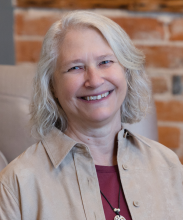
Receiving a diagnosis of mild cognitive impairment (MCI) or dementia can be an emotional and challenging experience. How can meditative practices support those living with MCI? Buddhist chaplain Sharon Lukert wrote her book, Until My Memory Fails Me, with the goal of sharing mindfulness and spiritual practices that have helped her since being diagnosed with MCI in 2021. She joins the podcast to share how her spirituality has impacted her journey to a diagnosis as well as strategies on navigating emotional struggles and building community for those living with MCI.
Guest: Sharon Lukert, author, Buddhist chaplain
Show Notes
Learn more about Sharon Lukert and her book, Until My Memory Fails Me, on her website.
Register for the Wisconsin ADRC’s Healthy Living with Mild Cognitive Impairment education series on our website.
Learn about the Wisconsin ADRC’s involvement in the development of new blood tests, mentioned by Mrs. Lukert at 12:50, on our website.
Interested in hearing more about what it’s like being involved in Alzheimer’s disease research? Listen to the Dementia Matters four-part series, “Voices of Research Participants,” on our website and wherever you listen.
Connect with us
Find transcripts and more at our website.
Email Dementia Matters: dementiamatters@medicine.wisc.edu
Follow us on Facebook and Twitter.
Subscribe to the Wisconsin Alzheimer’s Disease Research Center’s e-newsletter.
Enjoy Dementia Matters? Consider making a gift to the Dementia Matters fund through the UW Initiative to End Alzheimer’s. All donations go toward outreach and production.
Transcript
Intro: I'm Dr. Nathaniel Chin, and you're listening to Dementia Matters, a podcast about Alzheimer's disease. Dementia Matters is a production of the Wisconsin Alzheimer's Disease Research Center. Our goal is to educate listeners on the latest news in Alzheimer's disease research and caregiver strategies. Thanks for joining us.
Dr. Nathaniel Chin: Welcome back to Dementia Matters. When talking about mild cognitive impairment (MCI) on this podcast, we mostly discuss the more scientific aspects like research, early detection and dementia risk. Today, we're going more into the emotional and spiritual side of things. How can mindfulness help someone experiencing MCI? What type of meditative practices can benefit someone who's received an MCI diagnosis? Joining me today to answer these questions and more is Sharon Lukert, a Buddhist chaplain and recently published author of the book Until My Memory Fails Me. Diagnosed with MCI in 2021, Sharon has participated in multiple research studies with Wisconsin Alzheimer's Disease Research Center. Her book shares how her spiritual background has shaped the way she navigates cognitive decline. Mrs. Lukert, welcome to Dementia Matters.
Sharon Lukert: Thank you. It's really great to be here.
Chin: To start, can you walk us through your journey with MCI so far? Where did it start? What led you to get a diagnosis? What has the emotional impact of that diagnosis been like?
Lukert: Sure. This actually started back in 2019, so before the pandemic. I'd had a couple of instances of not recognizing one of my colleagues in the hallway and then another of being downtown in my city and feeling a little disoriented. I didn't quite know where I was. I had the neurocognitive testing done for the first time then and it was thought that I was just having a lot of stress in my life, which my job was quite stressful at the time. Actually, it was recommended that I might consider retiring a little earlier than I had been considering before, which I did in 2020. In 2021, I started noticing some more symptoms. I was having some word difficulty, saying the wrong word for something quite often. I was also missing appointments. I missed like six appointments in a month and that's very unusual for me. I went back for further testing and this time he was able to compare the test I had in 2019 to the test in 2021 and he could see a clear decline in at least one area. That's when I was diagnosed with mild cognitive impairment. I'd say my first reaction was shock, which I think is pretty typical. I wasn't even sure what mild cognitive impairment was. Even though I worked in healthcare all my life, I hadn't heard that term very much. It was surprising to me and I did a lot of research online, et cetera to learn more about it and find out more about it. That's one way that I cope, by finding out information. This really became what I consider a lifetime marker. There's before diagnosis and after diagnosis. Of course now I've had some time to adjust. I'm very much past the shock period. It does take a few months at least usually, if not longer, for someone to really kind of adjust to this new way of thinking about themselves. I would say that with time that does shift or can shift.
Chin: Sharon, what you describe is noticing symptoms and then eventually getting this evaluation and then taking years to get the confirmed diagnosis. What was the interval between first noticing those symptoms? The symptoms you describe would be scary I think for any of us. Was there a delay before you started speaking up to your primary care provider or your husband or family, or did you immediately recognize this and go in?
Lukert: You mean the first time?
Chin: First symptoms, yeah.
Lukert: Yeah, I recognized it pretty quickly. I think part of that had to do with being in the healthcare setting. I was aware that there was neuropsychological testing available. I wasn't aware or sure at the time whether my primary care provider would actually order it. When I did describe the symptoms, she thought it was warranted if nothing else to reassure me.
Chin: Well, it sounds like you were an advocate for yourself, which of course is really important. Even then, your story really showcases this difficulty in understanding normal aging from something that isn't, because it still took some time even with a good, thorough evaluation before this diagnosis of MCI was finally delivered.
Lukert: Absolutely. I have to say, as I mentioned to you earlier, I've been doing book readings, et cetera, and the biggest question I get from people is how do I tell the difference between normal aging and cognitive changes that are more than normal? My recommendation is always talk to your primary care provider because it's a hard question to answer. I sure don't have an answer for people.
Chin: Did your experience as a caregiver and a chaplain influence your perspective or do you think your experience at all from this beginning evaluation to now?
Lukert: Definitely. I had worked with a lot of people with cognitive decline both as a nurse and a home health aide in hospitals, home care, hospice as well as a chaplain. I have to say that all the people I had worked with who I had a significant relationship with came to mind, both their struggles and their gifts. I found at first I really needed to work through my own bias around the word dementia and cognitive decline before I could really settle into and adjust to the fact that this is something that’s going on for myself. It also helped to really remember their gifts because I knew so many people who really still thrived in their lives and still had a good quality of life well into the end stages. That also helped me adjust in a different way. I hope that's part of what I've relayed in the book to others, that we can actually meet cognitive decline with knowing that our life doesn't end with the diagnosis, that we can still enjoy many many days, hours, years to come.
Chin: I certainly took that away from reading your book, Sharon, that you brought realization but also positivity. Of course a part of me wonders about the spiritual aspect of your life and your being and how that really did manifest in your positive approach. Your book spends so much time talking about it. For our listeners, how has your spirituality, your Buddhist practice, supported you on this journey and has your relationship to these practices changed or evolved in unexpected ways?
Lukert: I am Buddhist and my particular practices are based in Buddhism, but I think any faith base can really support someone. I'd say the biggest thing that made a difference was having a larger perspective, something larger than myself. That is going to be different for different people. Within Buddhism, there really is this acceptance that illness, aging, death, they're all a part of living. That really has helped me accept that this is just how my life is going. There are also millions of other people going through the same thing, so it isn't just about me. The more I can connect with others, the more it keeps me in that sense of larger perspective. That was a big part of writing the book too because I really wanted to connect with other people going through similar situations. I'd say that how my practices have changed is there's a lot of ritual in Buddhism and a lot of times those rituals are quite long, like hours long. It's a little more difficult for me to participate in them fully. I still like to listen to them, but I find that day to day what I really focus on are more the on-the-spot meditations, like I've mentioned in the book, because this is what helps keep me grounded even when I feel a little confused or I get very clumsy and drop something and I start to denigrate myself. It's like, “No, take a breath.” This is a moment for practice. A lot of what's spoken about in Buddhism too is how do we meet the challenges and the struggles and even crisis in our life as opportunities. I've also been a lifelong learner, so both of those things combined really support my perspective of just taking what happens and working with it best I can. I'd also say that advocacy for me is a form of my practice. I really feel that it's important to educate people about cognitive decline in a way where we can accept it a little bit more in our culture and support people more with compassion and openness and understanding. I really see that as part of my Buddhist practice as well.
Chin: It really sounds like you're living the most meaningful parts of your life, that the things that matter most to you you've incorporated into your daily life. Is that fair for me to say?
Lukert: I think so. I think it's really important to focus on those things when you know that there's going to be decline in the future, whether that's cognitive decline or some other terminal disease. How can you live your best life for as long as you can? That can take all sorts of different ways depending on the individual.
Chin: In addition to highlighting the impact of spiritual practice as you've navigated this cognitive decline, you also discussed the importance of building community and social connections. Can you touch on this a little bit? How has building community connections helped you as you've been on this journey?
Lukert: What I've heard from a lot of people is cognitive decline can be very isolating because of a sense of shame, embarrassment, knowing that you can't keep up the way you have in the past. I certainly have felt all that, but I've found that the more honest I am with people, particularly friends and family, the more I can relax and just be myself, even if I'm making mistakes or saying the wrong thing or whatever it is that comes up. Not being afraid to ask for help is also really important. I had to give up driving a few years ago and my friends actually put together a group of them and one person is available to give me a ride every week, which has been so helpful for me and for my husband because then it doesn't all fall on him. The idea, too, was to develop a larger group of people who are involved with me so that as my care increases over time they will be familiar to me and also they'll be a little more familiar with what's going on with me. I think those are really important pieces and it can really help negate any sense of loneliness. I'm also a part of a support group for people with MCI and early dementia through the Alzheimer's Association. That's been great because I meet with other people who are going through similar things and we share tips and tricks. One caveat I have to say though is that there aren't too many of them in the country yet. I've talked to people in the Alzheimer's Association and they said that they're working on developing more, but right now they're more focused on caregivers and people with dementia already rather than people who are in the very early stages like myself. Hopefully there'll be more of them popping up.
Chin: Well, Sharon, I know you've attended our Healthy Living with MCI series through our Alzheimer's Disease Research Center. I completely agree. We need more of these programs. It is a different experience in the earlier stages. Being able to relate to that I think is really valuable. That speaks to one of the things you just said. There can be this feeling of shame with the thinking change, which might prevent someone from opening up. Now, as long as I've known you and I've known you for many years, I've never sensed that from you. Hearing you say that though, I'm hoping that reaches a lot of our listeners who may be experiencing their own thinking change, because it happens to the best of us. It even happened to you, and yet here you are very confidently being able to share your experience, which couldn't be easy, but at the same time you do it so effortlessly. I really appreciate your willingness to explain the things that you've been through so that others can really see your example. Thank you for doing that, Sharon.
Lukert: I have to say when something new comes up it takes me a little while. I had an experience where I was at a pier. We were going out on a boat and there were a lot of people around and a woman came over who obviously knew me and she took my hands and was talking to me and I had no idea who she was. I finally said, I'm sorry, but I just don't remember you. As soon as she said her name and how we knew each other, it came back. Those are embarrassing moments, but you get through.
Chin: Sharon, in your book you have such beautiful explanations of some of the mindfulness meditation practices you perform. Can you share for our listeners what kinds of mindfulness meditation practices you practice on a regular basis, or would you recommend to others who are just starting this? How have these been so helpful as you experience thinking and memory change
Lukert: Yeah, thanks. Well, I'll first mention formal meditation. It's something that a lot of people feel a little put off by because it sounds like you're sitting in silence staring at a wall for an hour at a time. I find, and this has been another change for me, I find that short sessions of formal meditation are more beneficial for me at this point. Certainly for someone who's starting out, five minutes is great. It doesn't have to be a marathon and it's more a matter of developing the habit and becoming familiar with it. That's formal meditation, but the ones I really focus on the most in my own life and also in the book are what I call the on-the-spot meditations. These can be done anywhere, anytime while you're walking, when you're in the grocery store, doing the dishes, it doesn't matter. You can just use one of these meditations. There are quite a few of them in the book. I won't take the time to go through them all, but I'd have to say my favorite to share is the pause practice, which I mention in the first chapter. It's a very foundational practice because you're just stopping and taking a few breaths and then noticing how you're feeling internally, what thoughts are going on and what emotions are going on. You do that for two or three breaths and then you just go back to what you were doing. It's not rocket science. It doesn't take a lot to do. Usually the issue is more developing the habit. I usually suggest putting sticky notes up or something like that if you really want to make this a habit. One of the benefits from it is when I'm feeling really confused or disoriented, if I pause it can really help me calm down internally. I often will then have a better perspective of what to do next. A recent example was I was traveling by myself recently to California and I was in line to check my bag. I had my boarding pass and my license in my hand and then suddenly my driver's license was missing. It wasn't in my purse, it wasn't in my pockets and I started to really panic because you can't go anywhere without your driver's license. I did the pause practice and just took a few breaths and I talked myself down a little bit and was like, okay, let's retrace my steps. I turned and walked about 10 or 15 steps and there my driver's license was on the floor, so crisis averted. Those are moments when I really find that the pause practice helps quite a bit.
Chin: It doesn't take very long. When you say two or three breaths, you're talking less than a minute.
Lukert: Yeah, absolutely. It also develops more of a sense of self-reflection and knowing for yourself what's going on. I recognized in that moment that I was panicking and that I needed to calm down. Otherwise I wasn't sure what I was going to do.
Chin: Sharon, were you doing this before you developed symptoms? Was this a common practice for you at baseline?
Lukert: Yeah, this is a practice I was introduced to by one of my teachers, Pema Chodron, probably 10 years ago. This has become very automatic for me. It does take time. Like I mentioned earlier, it can take a while to develop a habit like that. Because it's something I've been doing for a long time, it just comes up spontaneously for me. Sometimes I have to remember, “Come on, do a little practice here,” but usually it's pretty available for me. I'll put it that way.
Chin: Well it’s something we can all start incorporating now for those of us that don't do it yet?
Lukert: Yes, absolutely.
Chin: Sharon, getting a diagnosis of MCI or dementia can be a really emotional experience for most people. Do you have any techniques or strategies for finding joy or navigating the emotional struggles that come up following a diagnosis?
Lukert: Yes. I think the first step is realizing that there’s going to be emotional ups and downs. This is not an easy process. As one of my doctors once told me, it's unpredictable and illogical. That means you get surprised a lot. There are often times when I'm having a very good day, what I call good brain days, and then suddenly I can't remember something that I was just going to do and I feel confused and disoriented. Just realizing that things are going to go up and down really impacts our emotions. Anxiety is a big one for a lot of people with cognitive decline. I'm not sure how much that is from the change or if it's physiological because of what's going on in the brain or maybe both, I don't know, but it certainly is very common. Realizing that emotions are fluid can be really helpful. That, if we just wait a little while, it will change. Nothing is permanent, so it will change at some point. That is also a point when the pause practice can be really helpful. I'd say having some patience and gentleness with yourself is really important. As far as developing joy, it's a matter of really looking for delight in the moments in your own life. For me it's often looking out the window. I like to watch the kids going to school during the school year, watching the birds this time of year, watching the weather. That's one of the things that brings me joy. For my mom who has dementia at this point, it's music. If we put some music on she comes alive in a way that's just wonderful. Finding those ways that bring you delight and then purposely bringing them into your life, making it a habit every day to look out that window or listen to some music or whatever it is that helps you feel that sense of joy in your life.
Chin: Sharon, earlier you mentioned that something meaningful to you is advocacy. One of the ways in which I see that you're an advocate is that you're involved in research. You're pretty outspoken about it, you promote it. What drew you to participate in research and how has that impacted you as you go through this process?
Lukert: I'd say my first motivation was wanting to use my circumstances to help others. Realizing that being involved in research, I may not find anything out that's going to help me, but it's going to help in the long run. Sometimes even in the short run I have to say I find some pride in the fact that the P tau 217 blood test is now out there because I know I've donated my blood dozens of times and I hope that my donations had something to do with it. I would say that was my first motivation, but I have also found it helpful. Being connected with ADRC, finding out about the educational programs, being involved in a number of different kinds of research and realizing just how much is being studied right now has given me a sense of confidence of how things are going to change in the future. As you know, I also found out a little bit more about my own process through having an amyloid PET scan and finding out that it's elevated at this point, which between the decline I'm going through and that is likely Alzheimer's. I wouldn't have known that if I hadn't been involved in the research program. Although I wasn't expecting it because I didn't expect to find out anything about my own health, but there you go. It was there.
Chin: Sharon, thank you again for being on this podcast. I want to end with a two-part question and relate it to your book. Again for our listeners, Until My Memory Fails Me, it's a wonderful book and I have enjoyed reading it. My two-part question for you is, one, what is something fun or surprising that you experienced in writing this book? Then two, for those that are listening right now, what's a piece of advice from your book that you would recommend to help them as they're navigating memory or thinking change?
Lukert: Something fun was realizing that I like to write. I've never taken the time to just really sit and focus like this, so that was a lot of fun. The surprise was the community that kind of built up around it because I had readers. I had five different people who were reading each chapter as I went along and they would give me feedback and I would integrate that into the book. I really enjoyed the writing process. I also think it was timely because my writing has gone downhill since then and I don't think I would have the same capacity to do it now that I did at the time that I wrote it. It was very empowering to be able to write the book. As far as what I would suggest to those who are listening, really be as compassionate as you can with yourself or your caregivers. Be as compassionate as you can with the person going through decline. It's so disorienting and confusing and changes happen unpredictably and it can really throw you off. Being gentle and kind to yourself and compassionate can really make a difference in how you meet those moments when change happens.
Chin: So well said. Thank you, Sharon, again, for being on the podcast and for writing this you know a fantastic book, which I believe is going to reach many, many people and help those going through this experience.
Lukert: Thank you for having me.
Outro: Thank you for listening to Dementia Matters. Follow us on Apple Podcasts, Spotify or wherever you listen. Or tell your smart speaker to play the Dementia Matters podcast. Please rate us on your favorite podcast app. It helps other people find our show and lets us know how we're doing. If you enjoy our show and want to support our work, consider making a gift to the Dementia Matters Fund through the UW Initiative to End Alzheimer's. All donations go toward outreach and production. Donate at the link in the description. Dementia Matters is brought to you by the Wisconsin Alzheimer's Disease Research Center at the University of Wisconsin–Madison. It receives funding from private, university, state and national sources, including a grant from the National Institutes on Aging for Alzheimer's Disease Research. This episode of Dementia Matters was produced by Caoilfhinn Rauwerdink and edited by Alexia Spevacek. Our musical jingle is “Cases to Rest” by Blue Dot Sessions. To learn more about the Wisconsin Alzheimer's Disease Research Center, check out our website at adrc.wisc.edu. That's adrc.wisc.edu and follow us on Facebook and Twitter. If you have any questions or comments, email us at Dementia Matters at medicine.wisc.edu. Thanks for listening.